Dense Insulation for Durability and Moisture Control
Closed-Cell Spray Foam Insulation in Ronan for buildings exposed to cold temperatures and seasonal weather changes
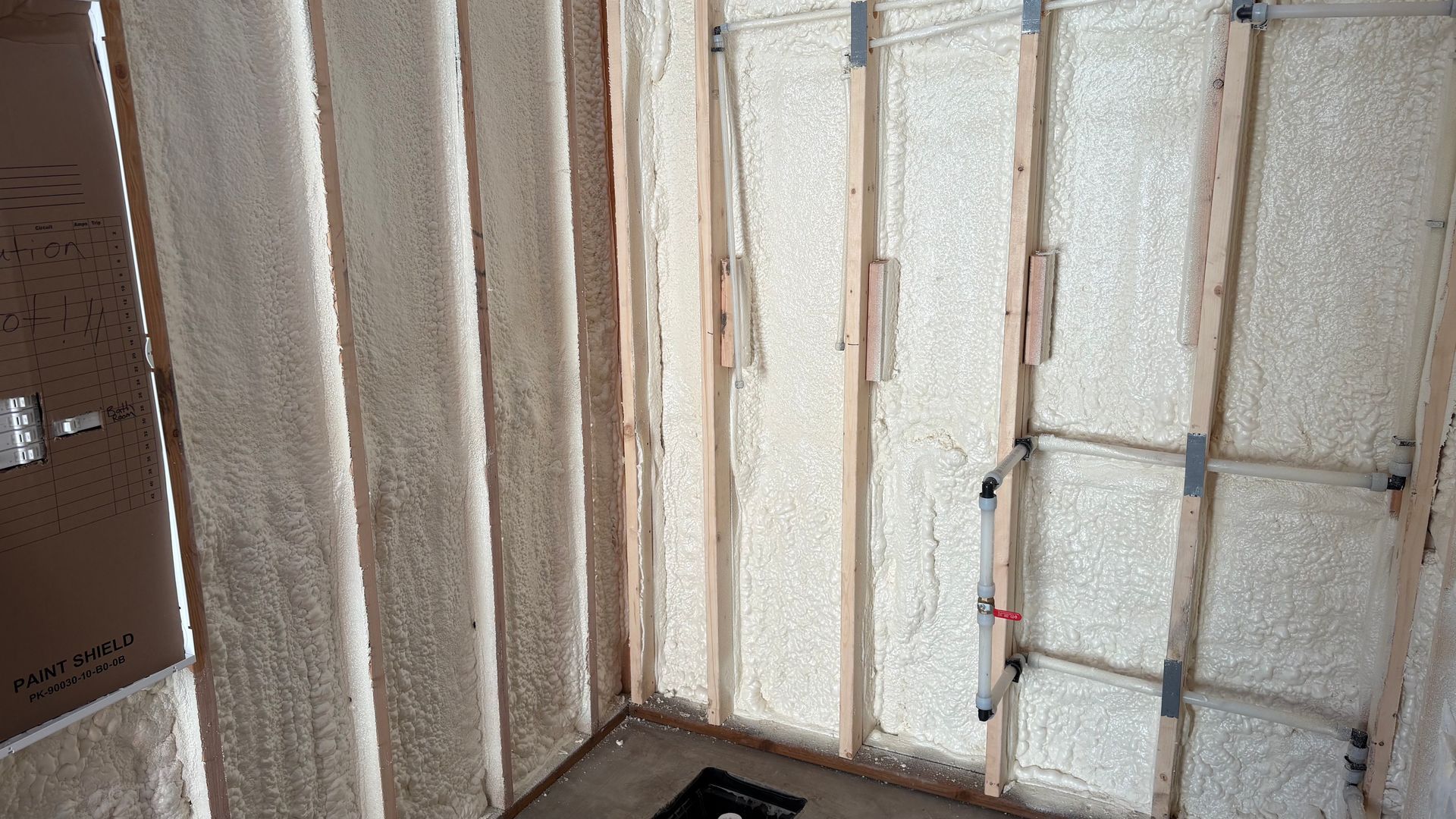
Mountain States Spray Foam applies closed-cell spray foam insulation in Ronan and surrounding areas for property owners who need rigid, moisture-resistant insulation in walls, crawl spaces, and exterior applications. This material forms a dense layer that provides high R-value per inch while adding structural rigidity to framing. You gain both thermal performance and a strong air barrier that blocks drafts and prevents heat loss during extended cold periods.
Closed-cell foam cures into a firm surface that resists water penetration and vapor transmission. This makes it suitable for pole barns, shops, metal buildings, and other structures where moisture exposure or condensation risk exists. The foam bonds directly to steel, wood, and concrete surfaces without leaving gaps that compromise insulation effectiveness. Buildings in this region face temperature swings and snow loads that demand insulation capable of maintaining performance under stress.
If your building needs insulation that strengthens the envelope while sealing out cold air, contact Mountain States Spray Foam to discuss closed-cell foam options for your project in the Ronan area.
How Closed-Cell Foam Performs After Curing
Your walls or roof deck receive a rigid foam layer that does not absorb water or allow air passage. The material cures into a solid mass that remains stable across temperature changes. You will notice improved heating efficiency and reduced drafts in spaces that previously felt cold despite running heating systems.
The foam also provides structural bracing that can increase wall shear strength and roof deck rigidity. This benefit matters in metal buildings and pole barns where traditional insulation adds no structural value. Mountain States Spray Foam ensures consistent foam thickness and coverage across all surfaces to prevent thermal bridging and weak points in the insulation system.
Installation requires spray equipment capable of mixing two-component foam at the correct ratio and temperature. Foam must be applied in controlled lifts to prevent overheating during cure. The service does not include removal of existing insulation or repair of structural damage unrelated to insulation performance.
Common Questions About Closed-Cell Foam
Owners often want to know how closed-cell foam differs from open-cell foam and whether the higher cost provides measurable benefits in this climate.
What makes closed-cell foam different from open-cell foam?
Closed-cell foam has a higher density, greater R-value per inch, and functions as a vapor barrier, while open-cell foam is lighter, more flexible, and allows some vapor transmission.
How thick does closed-cell foam need to be for exterior walls?
Most exterior wall applications use two to three inches of closed-cell foam to achieve sufficient R-value and air sealing, though thickness varies based on building code requirements and climate zone.
Why is closed-cell foam recommended for metal buildings in Ronan?
Metal buildings often experience condensation when warm indoor air contacts cold metal surfaces, and closed-cell foam prevents this by creating a continuous vapor barrier that stops moisture movement.
What surfaces can closed-cell foam be applied to?
The foam adheres to clean, dry wood, steel, concrete, and most building materials, provided surfaces are free of oils, dust, or moisture that would interfere with bonding.
When is closed-cell foam worth the additional cost compared to other insulation types?
You benefit most when moisture resistance, structural reinforcement, or maximum R-value in limited space are priorities for your building project.
Mountain States Spray Foam installs closed-cell foam in residential, commercial, and agricultural buildings throughout the Ronan area. Call to review your insulation requirements and learn whether closed-cell foam suits your building's needs.